7 Cheap DIY Planter Ideas for Beginners

Planters are one of the few gardening costs you can almost eliminate. Plants do not care whether their container came from a garden center or your recycling bin. They care about volume, drainage, and stable material. Here are seven ideas that meet those requirements, followed by the practical details that make any of them work.
Seven containers worth upcycling
- Large food tins. Coffee, tomato, and olive oil tins are the right size for herbs and small houseplants. Sand the cut rim smooth if it is sharp.
- Wooden crates and drawers. Line them loosely with landscape fabric so soil stays put while water still escapes. Great for shallow rooted greens.
- Chipped mugs and teapots. Perfect for a single small succulent or a propagated cutting, as long as you can get a hole in the bottom.
- Five gallon buckets. The workhorse of cheap container gardening. One bucket comfortably grows a tomato, a pepper, or a small shrub.
- Colanders and wire baskets. Drainage is already handled. Line with coco fiber or burlap and use them for trailing plants.
- Old boots, watering cans, and toolboxes. Illinois Extension explicitly lists recycled items like old boots, shoes, washtubs, furniture, milk crates, baskets, wagons, carts, and toys among workable container materials.
- Concrete blocks and bricks. Stack them into a low bed and fill the cavities. Heavy, permanent, and nearly free.
How to add drainage to anything
Every one of these needs a way for water to leave. For metal and plastic, a standard twist bit makes clean holes in seconds. For ceramic, glazed pottery, and glass, use a masonry or diamond tipped bit, keep the surface wet, and go slowly with light pressure so the material does not crack or overheat. Wear eye protection regardless of material.
Aim for several holes rather than one big one, spread across the base. Roughly one half inch hole for every six inches of base width is a good starting ratio. If drilling is impossible, the safest approach is to treat the found object as a cachepot and slip a plain nursery pot inside it.
Resist the temptation to skip the holes and add gravel instead. A rock layer does not substitute for an exit, because water still has to saturate the soil above it before it moves anywhere.
Growing food in upcycled containers
Ornamentals are forgiving. Edibles deserve more care about what the container is made of and what it used to hold. Use containers that once held food or water, not solvents, paint, fuel, or chemicals, because residues can persist in porous surfaces.
Wood raises the most questions. Older pressure treated lumber used chromated copper arsenate, and Maryland Extension notes that CCA treated wood is no longer available for residential use as of 2004. Modern treatments use copper based preservatives that the same guidance describes as low in toxicity, and it points to research finding no increase in copper concentration in plants grown in beds built with pressure treated lumber. If you are still uneasy, that guidance suggests lining the wood with heavy plastic, or choosing stone, concrete block, brick, or naturally decay resistant wood such as cedar.
The safety point that matters most: old paint
If you are rescuing painted furniture, painted trim, or salvage from an old building, stop before you sand. The Environmental Protection Agency warns that if your home was built before 1978, it is more likely to have lead based paint, and that deteriorating paint that is peeling, chipping, chalking, or cracking is a hazard that needs immediate attention. Sanding or scraping that paint creates fine dust, which is the main route of exposure.
The EPA also notes that soil can become contaminated when exterior lead based paint flakes and gets into it, which is a real concern if you plan to grow food. If a salvaged item has unknown old paint, do not sand it. Either leave the finish intact and use the item as an outer decorative sleeve for a separate liner pot, or skip it and grow edibles in something you can identify.
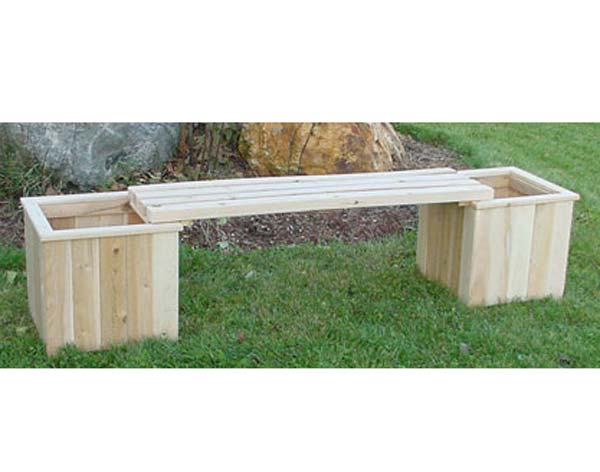
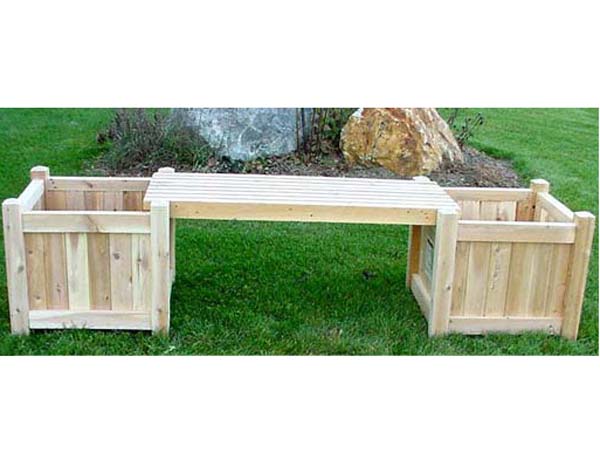
Simple ways to make a cheap pot look good
Clean the surface, prime it, and use an exterior grade paint so it survives water and sunlight. Painting several mismatched containers a single color instantly makes a collection look intentional. Light colors also reflect summer heat instead of cooking the root zone. A wrap of jute twine, a strip of leftover tile, or plain matte black spray paint will disguise a plastic bucket surprisingly well. Keep any paint on the outside only, and let everything cure fully before you add soil and a plant.
Shopping for plants this weekend?
Our directory lists plant nurseries and garden centers across the US with each one's address, phone, and website, so you can buy from real local growers.
Find a nursery near you

